
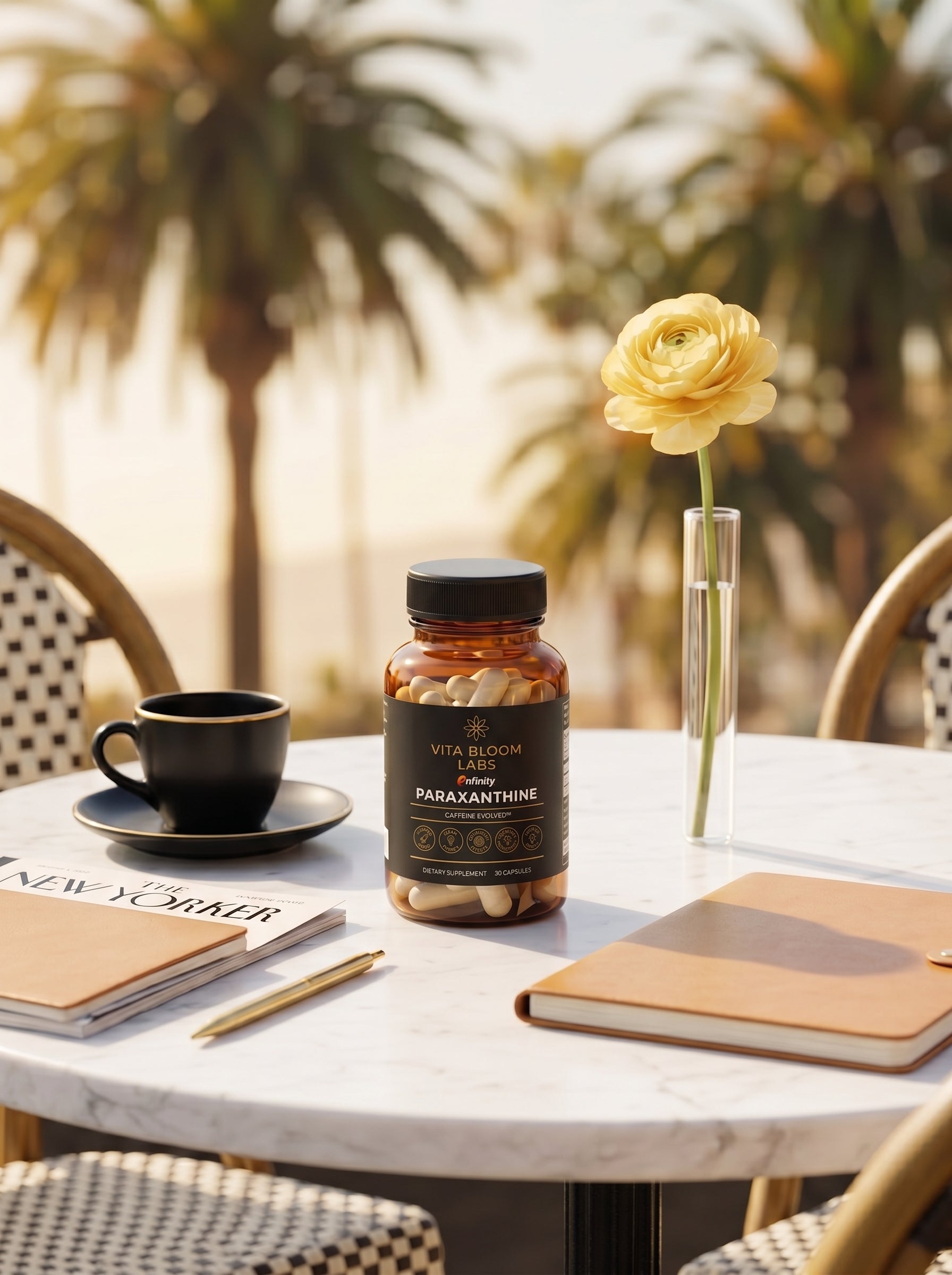
Paraxanthine vs Caffeine: The Difference, Explained
In this article
Paraxanthine went from a word almost nobody recognized to a trending ingredient seemingly overnight. A big reason: a wave of caffeine-free energy products built around it, including a widely covered celebrity-backed energy drink that put "what is paraxanthine" into millions of search bars in early 2026.
So here is the honest, science-first answer to the question everyone is now asking. What is paraxanthine, and how is it actually different from caffeine?
What is paraxanthine?
Paraxanthine is not an exotic new stimulant. It is the primary metabolite of caffeine, which means it is the compound your own body produces when it breaks caffeine down. When you drink coffee, a large share of that caffeine is converted into paraxanthine, and researchers have long suspected that paraxanthine is responsible for much of the alertness and focus people associate with caffeine, without carrying all of caffeine's baggage.
In other words, when you feel the good part of coffee, you may largely be feeling paraxanthine. Taking it directly is simply skipping the conversion step.
Paraxanthine vs caffeine: how they differ
Caffeine and paraxanthine are chemically close cousins, but small structural differences change how they behave in the body.
Focus without the adrenaline spike. Caffeine is a broad stimulant that can ramp up cardiovascular activation, which is where jitters, racing heart, and that wired feeling come from for sensitive people. Paraxanthine is associated with alertness and focus with less of that adrenaline-style activation, which is why it is often described as "cleaner" energy.
A shorter half-life. In a small human study, paraxanthine showed a half-life of roughly 3.1 hours, compared with about 4.1 hours for caffeine, and caffeine's half-life varies widely from person to person (anywhere from about 2.5 to nearly 10 hours). A shorter half-life means a morning dose is less likely to still be circulating at bedtime.
Gentler on the stomach. Caffeine can be harsh on the digestive tract for some people. Paraxanthine is often reported as gentler, though individual experiences vary.
At a glance
| Caffeine | Paraxanthine | |
|---|---|---|
| What it is | The parent stimulant in coffee and tea | The primary metabolite your body makes from caffeine |
| Half-life | About 4.1 hours, but varies widely (2.5 to ~10 hours) | About 3.1 hours in a small study |
| Jitters and adrenaline feel | Common for sensitive people | Less cardiovascular activation reported |
| Effect on sleep timing | Longer half-life can linger into the evening | Shorter half-life clears sooner |
| Digestive comfort | Can be harsh for some | Often reported as gentler |
Why people call it "clean energy"
The phrase "clean energy" is marketing shorthand, but there is a real idea behind it: focus and alertness with a smaller side of the crash, jitters, and late-night restlessness that send many people looking for a caffeine alternative in the first place. If coffee leaves you wired then flat, paraxanthine is worth understanding.
Is paraxanthine safe?
This is the question the recent headlines have raised most, and it deserves a straight answer. Paraxanthine used as a supplement ingredient (the enfinity branded form is the one you will see most often) has been granted GRAS status, which stands for Generally Recognized As Safe, for its intended use. It has been studied in human trials at several doses, with 200 mg being a commonly used amount.
That said, paraxanthine is still a stimulant metabolite, so a little common sense applies. Start low to see how you respond, avoid stacking it on top of a large amount of other caffeine, and skip it late in the day if you are sensitive. As with any supplement, talk to your physician first if you are pregnant, nursing, take medication, or have a heart condition.
About the energy-drink moment
If paraxanthine reached you through a can rather than a capsule, it helps to know what is inside those products. The high-profile caffeine-free energy drink that drove much of the 2026 attention pairs about 300 mg of paraxanthine with roughly 315 mg of alpha-GPC per 12 fl oz serving, along with flavoring and other ingredients. That is a blend built for a beverage experience.
A single-ingredient capsule is a different tool. Vita Bloom Labs Enfinity Paraxanthine delivers 200 mg of paraxanthine per capsule, and nothing else. No sweeteners, no stacked stimulants, no proprietary blend. If you want to actually understand how paraxanthine feels for you, isolating the one variable is the cleanest way to do it, and it is the approach a single-ingredient, physician-owned brand is built around.
The bottom line
Caffeine and paraxanthine are closely related, and paraxanthine may be responsible for much of what people like about caffeine in the first place. The differences that matter are a shorter half-life, less adrenaline-style activation, and a gentler feel for many people. If jitters, crashes, or disrupted sleep are what pushed you toward a caffeine alternative, paraxanthine is the molecule to know.
Ready to try the single-ingredient version? See Enfinity Paraxanthine, 200 mg per capsule. New to the ingredient? Start with our Paraxanthine basics for beginners.
Frequently asked questions
Is paraxanthine safe?
The commonly used supplement form (enfinity paraxanthine) has GRAS status for its intended use and has been studied in human trials. It is still a stimulant metabolite, so start low, avoid stacking it with heavy caffeine, and check with your physician if you are pregnant, nursing, on medication, or have a heart condition.
Does paraxanthine cause jitters?
It is associated with less cardiovascular activation than caffeine, which is why many people report fewer jitters. Individual sensitivity still varies, so a lower first dose is a good idea.
What is the difference in half-life between paraxanthine and caffeine?
In a small study, paraxanthine had a half-life of about 3.1 hours versus about 4.1 hours for caffeine. Caffeine's half-life also varies a lot between individuals, which is part of why it can affect sleep more.
Can I take paraxanthine every day?
Many people use it as a daily caffeine alternative. Use it as directed on the label, and as with any stimulant, pay attention to how you respond and to timing later in the day.
Is paraxanthine a caffeine alternative?
Yes. It is one of the main reasons people look at it: focus and alertness with a shorter half-life and less of the jittery, wired feeling caffeine can produce.
These statements have not been evaluated by the Food and Drug Administration. This product is not intended to diagnose, treat, cure, or prevent any disease.
Educational information, not personal medical advice. Ingredient research does not establish that a finished supplement treats or prevents a disease. Follow your product label and ask your healthcare professional about personal suitability.
Questions or a suggested correction? →


Leave a comment
This site is protected by hCaptcha and the hCaptcha Privacy Policy and Terms of Service apply.