
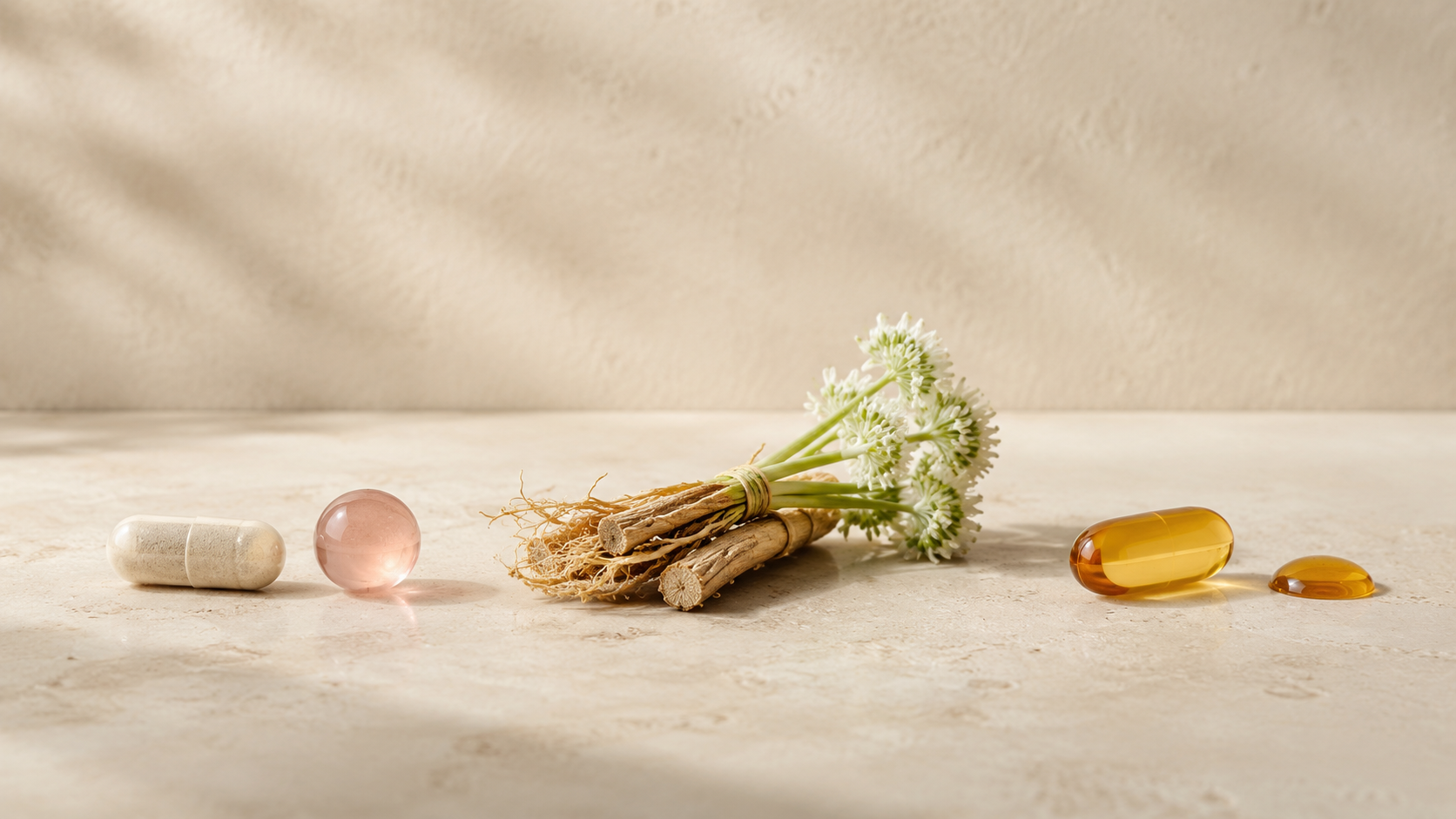
Prebiotics vs Probiotics vs Postbiotics: A Simple Guide
In this article
Prebiotics, probiotics, and postbiotics. The names are almost identical, they sit next to each other on the shelf, and it is genuinely easy to mix them up. But they are three different things that support your gut in three different ways.
Here is a simple guide to the difference, and how to think about which one fits what you are looking for.
The quick version
If you remember nothing else, remember this:
- Probiotics are the beneficial bacteria themselves.
- Prebiotics are the food that feeds those bacteria.
- Postbiotics are the beneficial compounds the bacteria produce.
In other words, one is the gardener, one is the fertilizer, and one is the harvest. Now let us look at each.
Probiotics: the live bacteria
Probiotics are live microorganisms that, in adequate amounts, are intended to confer a health benefit. These are the strains you have probably heard of, like Lactobacillus and Bifidobacterium, along with next-generation strains such as Akkermansia muciniphila.
The idea is to add beneficial organisms to your existing microbiome. Different strains do different things, which is why the specific strain and its potency matter more than the word "probiotic" on the front of a package.
Prebiotics: the food for your bacteria
Prebiotics are not alive. They are substrates, usually specific fibers, that your beneficial gut bacteria selectively use as fuel. Common examples include inulin, fructooligosaccharides, and galactooligosaccharides, which show up naturally in foods like onions, garlic, chicory root, and many other plants.
The goal with prebiotics is not to add bacteria but to feed the good ones you already have, encouraging them to grow and do their work. This is also why a varied, plant-rich, higher-fiber diet is one of the simplest ways to support your gut.
Postbiotics: the beneficial byproducts
Postbiotics are the newest term of the three. A postbiotic is a preparation of inanimate microorganisms or their components that confers a health benefit, and in everyday use the word usually refers to the beneficial compounds bacteria produce when they ferment fiber.
A commonly cited example is butyrate, a short-chain fatty acid that fuels the cells lining your colon and supports the gut barrier. Rather than adding bacteria or feeding them and waiting, a postbiotic supplement can provide the beneficial end product more directly. Tributyrin, a stable form of butyrate, is a common way to do this.
At a glance
| Probiotics | Prebiotics | Postbiotics | |
|---|---|---|---|
| What it is | Live beneficial bacteria | Fiber that feeds bacteria | Beneficial compounds bacteria produce |
| Alive? | Yes | No | No |
| Examples | Lactobacillus, Bifidobacterium, Akkermansia | Inulin, FOS, GOS | Butyrate, tributyrin |
| The role | Adds beneficial organisms | Feeds the ones you have | Delivers the end product directly |
What about synbiotics?
You may also see the word synbiotic. That simply means a product that combines a probiotic and a prebiotic together, the bacteria and their food in one place. It is a combination category rather than a fourth separate thing.
Which one should you choose?
They are not competitors, and many people use more than one. A simple way to think about it:
- A probiotic if you want to add a specific beneficial strain, such as a single-strain Akkermansia.
- A prebiotic, or simply more diverse plant fiber, if you want to feed the bacteria you already have.
- A postbiotic like tributyrin if you want to deliver a beneficial compound such as butyrate more directly.
The single-ingredient approach makes this easier, because you can see exactly which category you are choosing and at what dose, rather than guessing what is inside a blend.
How Vita Bloom fits
Our gut lineup includes one of each of the two you are most likely to supplement directly: a probiotic and a postbiotic. Our Akkermansia Probiotic is a single-strain, next-generation probiotic, and our Tributyrin is a butyrate postbiotic. You can explore both in the gut health collection.
Frequently asked questions
What is the difference between prebiotics, probiotics, and postbiotics?
Probiotics are live beneficial bacteria. Prebiotics are the fibers that feed those bacteria. Postbiotics are the beneficial compounds, such as butyrate, that bacteria produce. One adds organisms, one feeds them, and one delivers the end product.
Can I take them together?
Yes. They support gut health in complementary ways, and many people combine a probiotic, dietary fiber or a prebiotic, and a postbiotic. A product that combines a probiotic and a prebiotic is called a synbiotic.
Is a postbiotic better than a probiotic?
Neither is universally better; they do different jobs. A probiotic adds live bacteria, while a postbiotic delivers a beneficial compound those bacteria would produce. Which fits depends on your goal.
Are prebiotics just fiber?
Prebiotics are a specific kind of fiber that your beneficial gut bacteria selectively use as fuel. Not all fiber is a prebiotic, but a varied, plant-rich, higher-fiber diet is a simple way to support your microbiome.
Which one does Vita Bloom make?
Both a probiotic and a postbiotic: a single-strain Akkermansia Probiotic and a Tributyrin butyrate postbiotic, each as a single-ingredient, clearly dosed capsule.
These statements have not been evaluated by the Food and Drug Administration. These products are not intended to diagnose, treat, cure, or prevent any disease.
Educational information, not personal medical advice. Ingredient research does not establish that a finished supplement treats or prevents a disease. Follow your product label and ask your healthcare professional about personal suitability.
Questions or a suggested correction? →


Leave a comment
This site is protected by hCaptcha and the hCaptcha Privacy Policy and Terms of Service apply.