
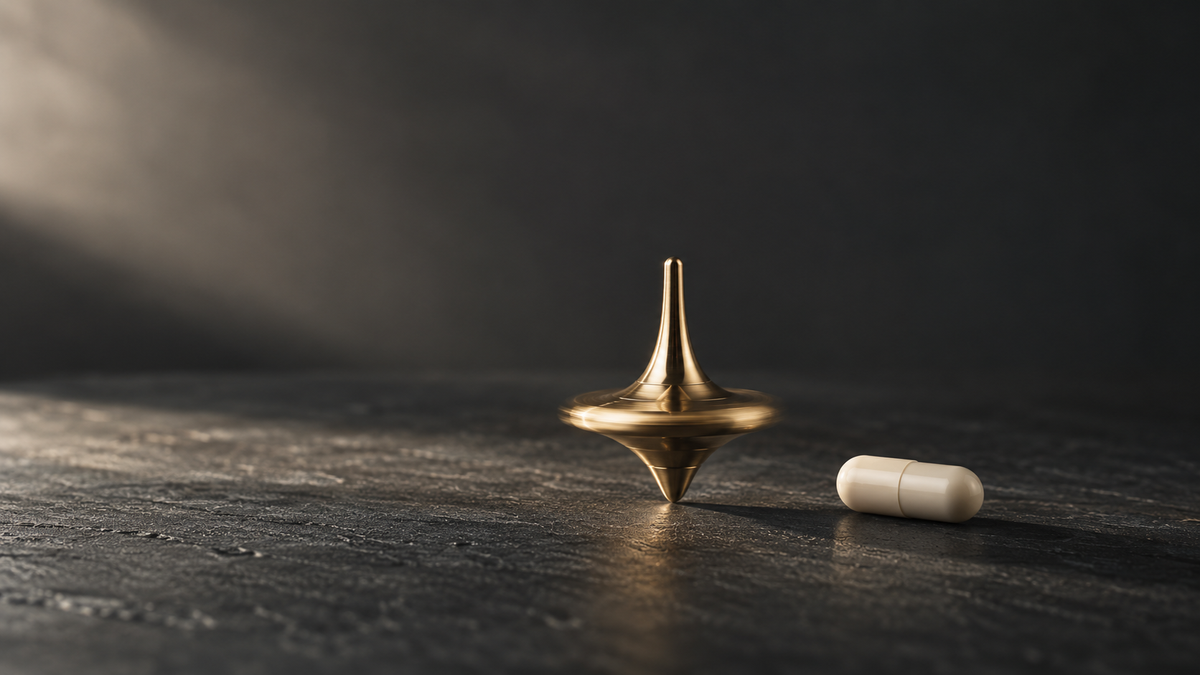
The Caffeine Crash: Why It Happens and Where d9-Caffeine Fits
In this article
You know the feeling. A few hours after your coffee, the focus fades, your eyelids get heavy and you start bargaining with yourself about a second cup. That is the caffeine crash. It is common, it has several causes, and some of them have nothing to do with caffeine itself. Here is what is going on, and where d9-caffeine fits.
What a caffeine crash is
"Caffeine crash" is not a medical diagnosis. It is the everyday name for a drop in energy, focus or mood as caffeine wears off. People describe tiredness, brain fog, irritability and sometimes a headache. For morning coffee drinkers it tends to arrive in the early afternoon, which is also when the body's natural afternoon dip shows up.
Why it happens
1. Adenosine catches up
Adenosine builds up in the brain the longer you are awake and helps create sleep pressure. Caffeine works mainly by blocking adenosine receptors. It does not stop adenosine from accumulating. As caffeine levels fall, that built-up sleep pressure is no longer masked, and you feel it.
2. Sleep debt
Caffeine hides tiredness; it does not repay it. If you are short on sleep, part of the crash is simply your real level of tiredness showing up once caffeine fades.
3. Sugar in the cup
Sweetened coffee drinks and many energy drinks deliver a large dose of sugar along with the caffeine, and a big sugar load can add its own energy dip on top of the caffeine wearing off.
4. Daily withdrawal
If you use caffeine every day, part of the morning fog before your first cup may be withdrawal. A 2004 review of caffeine withdrawal found symptoms typically begin 12 to 24 hours after the last dose, peak at 20 to 51 hours and can last two to nine days. Headache occurred in about half of people, and withdrawal was documented at daily intakes as low as 100 mg.
5. The redose loop
The usual fix is another coffee at 2 or 3 p.m. Because regular caffeine's half-life is around five hours, a large share of that afternoon dose is still in your system at bedtime. Poorer sleep makes tomorrow's crash worse, and the loop repeats.
Crash causes and what helps
| Cause | What helps |
|---|---|
| Adenosine catching up | Steadier caffeine levels instead of sharp rises and drops |
| Sleep debt | More sleep; no form of caffeine replaces it |
| Sugary drinks | Unsweetened options and a real meal |
| Daily withdrawal | Consistent intake, and tapering instead of stopping abruptly |
| Afternoon redosing | A morning plan that does not depend on a late cup |
Where d9-caffeine fits
d9-caffeine is caffeine with nine hydrogen atoms replaced by deuterium, which slows how quickly the liver breaks it down. In a 2022 double-blind study in 20 healthy adults, it was absorbed as quickly as regular caffeine, reached a higher peak at the same molar dose and produced four to five times the total exposure over time. Our explainer on what d9-caffeine is has the details.
What that changes is the shape of your day. Regular caffeine rises fast and falls on a roughly five-hour half-life, which is why the early afternoon is when most people go looking for a second cup. d9-caffeine's levels fall far more slowly, so a single morning dose is still working through the afternoon. That goes straight at the redose loop: fewer reasons for a late coffee, and less caffeine landing on your sleep. For the numbers behind this, see caffeine half-life and d9-caffeine.
The other causes on the list still need their own fixes. No form of caffeine repays sleep debt, and any daily caffeine habit comes with the tolerance and withdrawal patterns covered in our guide to caffeine tolerance and d9-caffeine.
A simple anti-crash routine
- Take your caffeine in the morning, and let one dose do the work.
- Eat a real lunch with protein and fiber rather than a sugar-heavy one.
- Get daylight and movement, even a ten-minute walk, when the afternoon dip arrives.
- Protect your sleep, since tomorrow's energy starts tonight.
- Keep intake consistent from day to day, and taper rather than stopping abruptly if you want to cut back.
Who should check with a physician first
Skip d9-caffeine, or talk to your physician first, if you are pregnant or breastfeeding, under 18, sensitive to caffeine, or have a heart condition, high blood pressure, an arrhythmia, an anxiety disorder or a sleep disorder, and check with your physician or pharmacist if you take prescription medication. Persistent daytime exhaustion despite enough sleep is also worth a conversation with your physician rather than more caffeine.
How Vita Bloom fits
Caffeine 2.0 delivers 22.5 mg of patented Deura9® d9-caffeine per capsule, with nothing else active. Take one capsule in the morning, up to four a day, and never more than 90 mg of d9-caffeine. If you like pairing caffeine with L-theanine, Caffeine 2.0 + L-Theanine adds 50 mg of L-theanine to the same dose.
Frequently asked questions
How long does a caffeine crash last?
It depends on the cause. A dip from caffeine wearing off tends to pass with food, movement or rest. Withdrawal from a daily habit is different: in the 2004 review, symptoms lasted two to nine days.
Why do I crash after coffee but not after tea?
Tea usually has less caffeine per cup than coffee, so the rise and fall are smaller.
Does d9-caffeine cause a crash?
Responses vary from person to person. d9-caffeine's levels decline much more slowly than regular caffeine's, and the routine above still matters: sleep, food and morning-only timing.
Will more caffeine fix a crash?
In the short term it masks it. Later in the day it tends to cost you sleep, which sets up tomorrow's crash.
Deura9® is a registered trademark of Lennham Pharmaceuticals, Inc. under exclusive license to d9 Designs Inc.
These statements have not been evaluated by the Food and Drug Administration. This product is not intended to diagnose, treat, cure, or prevent any disease.
Educational information, not personal medical advice. Ingredient research does not establish that a finished supplement treats or prevents a disease. Follow your product label and ask your healthcare professional about personal suitability.
Questions or a suggested correction? →


Leave a comment
This site is protected by hCaptcha and the hCaptcha Privacy Policy and Terms of Service apply.