PeptiStrong vs Creatine: Which One Should You Take?
If you have a limited supplement budget and you lift, the question is fair: PeptiStrong or creatine? We sell PeptiStrong and we do not sell creatine, so you might expect a slanted answer. Here is the unslanted one, starting with the conclusion: if you take only one, take creatine. Then read on, because the two do genuinely different jobs, and the honest comparison is more useful than the verdict.
Two different mechanisms
Creatine increases the phosphocreatine stored in your muscles, which regenerates ATP, the immediate energy currency for short, intense efforts like heavy sets and sprints. More reps at a given weight, over months of training, adds up to more strength and modest gains in lean mass. It is a fuel-system supplement.
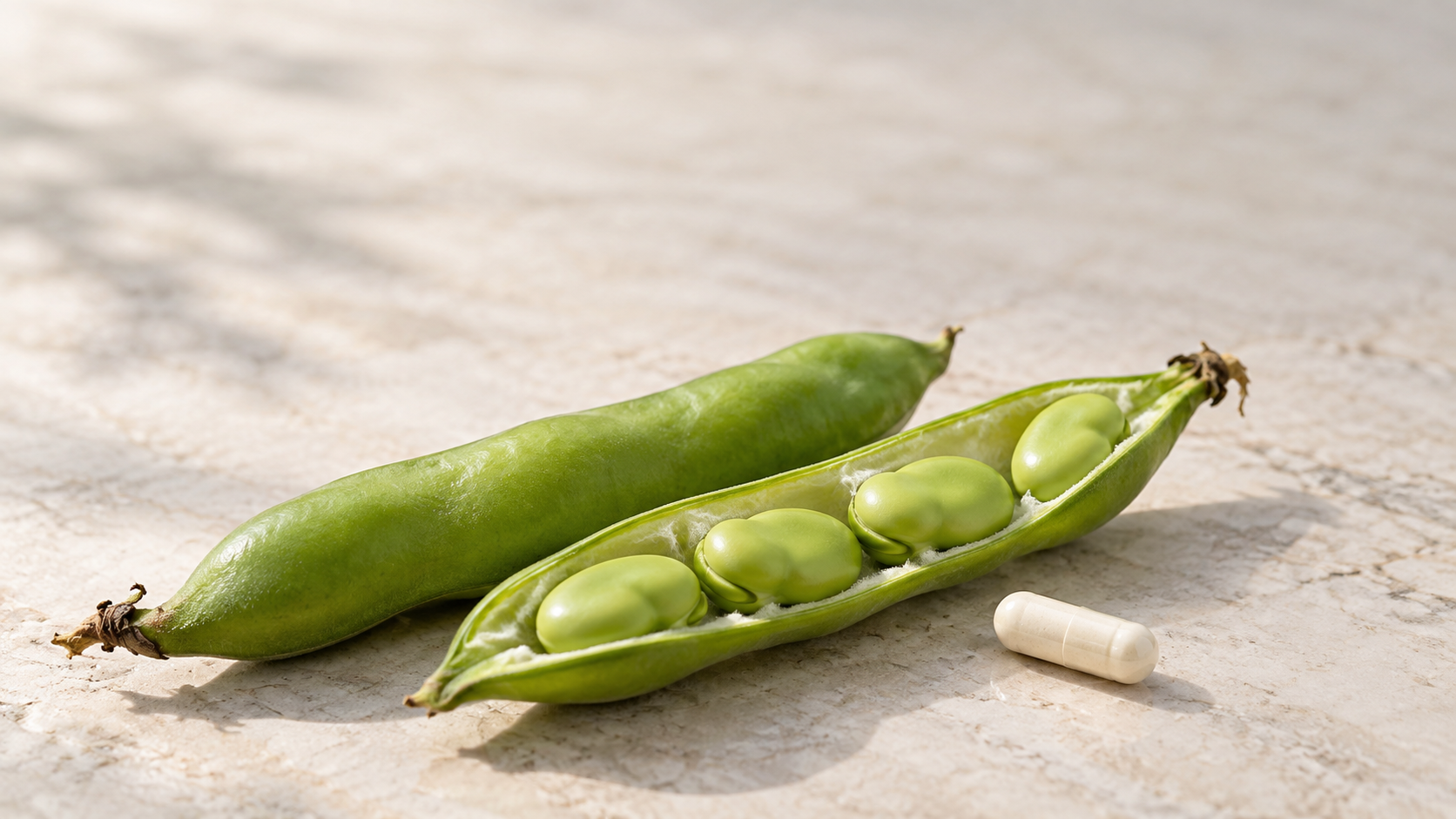
PeptiStrong is a network of peptides derived from fava bean protein, proposed to act as signals to muscle cells rather than as fuel. In cell studies it increased a marker of the mTOR pathway; in human trials it reduced circulating myostatin, a natural brake on muscle growth, and improved strength recovery after hard exercise. It is a signaling supplement. Our full explainer, what is PeptiStrong, covers the chemistry.
Fuel versus signal. That is why the comparison is not really either-or, and why the marketing line that PeptiStrong "outperforms creatine" deserves scrutiny, which it gets below.
The evidence gap, stated plainly
This is the part that decides the budget question.
Creatine monohydrate is the most-studied sports supplement in existence, with hundreds of human trials across decades, in men and women, young and old, trained and untrained. Its effects on strength and lean mass with resistance training are consistent, its safety at 3 to 5 g a day in healthy adults is well established, and it is cheap.
PeptiStrong has three published human trials, all funded by its manufacturer, Nuritas, with Nuritas employees as co-authors. Two of them used the 2.4 g supplement dose: one found better strength recovery over 72 hours after a muscle-damaging workout in 30 men, and one found greater leg strength and endurance gains over eight weeks of training in 72 adults, with the week-eight strength result right at the edge of statistical significance. The third trial, the one behind the "beats milk protein" headlines, used 20 g a day, so it does not tell you what the supplement dose does. There are no long-term trials, no independent replications, and nothing in athletes or older adults yet.
Those are two different tiers of evidence, and pretending otherwise would be dishonest about the ingredient we sell.
About that "five times better than creatine" claim
You may see marketing stating that PeptiStrong beat creatine on mTOR activation by a factor of five. That comparison comes from a cell study: muscle cells in a dish exposed to each compound, measuring a molecular signal. It is not a human trial, it did not measure strength or muscle, and creatine's benefits do not primarily run through mTOR in the first place. It is a legitimate laboratory finding and a meaningless basis for choosing between the two.
Side by side
| Creatine monohydrate | PeptiStrong | |
|---|---|---|
| What it is | A compound your body already makes and stores in muscle | A peptide network from fava bean protein |
| Mechanism | Fuel: rapid ATP regeneration | Signal: muscle-building pathways, myostatin |
| Best-supported effects | Strength, power, lean mass with training | Strength recovery after hard sessions; strength and endurance gains with training |
| Evidence base | Hundreds of trials over decades | Three trials, two at the supplement dose, all manufacturer-funded |
| Studied dose | 3 to 5 g daily | 2.4 g daily |
| Common side effects | Water retention, occasional digestive upset at high doses | None significant reported in trials; see the fava bean note below |
| Cost | Very low | Considerably higher |
Can you take PeptiStrong and creatine together?
Yes. They work through unrelated mechanisms, there is no known interaction, and several products on the market already combine them. What does not exist is a human trial of the combination, so treat "they work even better together" as a plausible idea rather than a finding. If you stack them, keep each at its studied dose: 3 to 5 g of creatine and 2.4 g of PeptiStrong daily. Adding a stimulant for training is a separate decision, covered in our pre-workout guide.
The order of operations
- First, protein and training. No supplement in this article does anything without resistance training and adequate daily protein. Every positive PeptiStrong trial paired it with exercise.
- Second, creatine. Cheapest, best evidenced, and the largest expected effect of anything you can buy legally.
- Third, PeptiStrong, if your budget allows and recovery or an extra strength stimulus is your goal. Run it for the full eight weeks the training trial used and judge it against a log, not a feeling.
How Vita Bloom fits
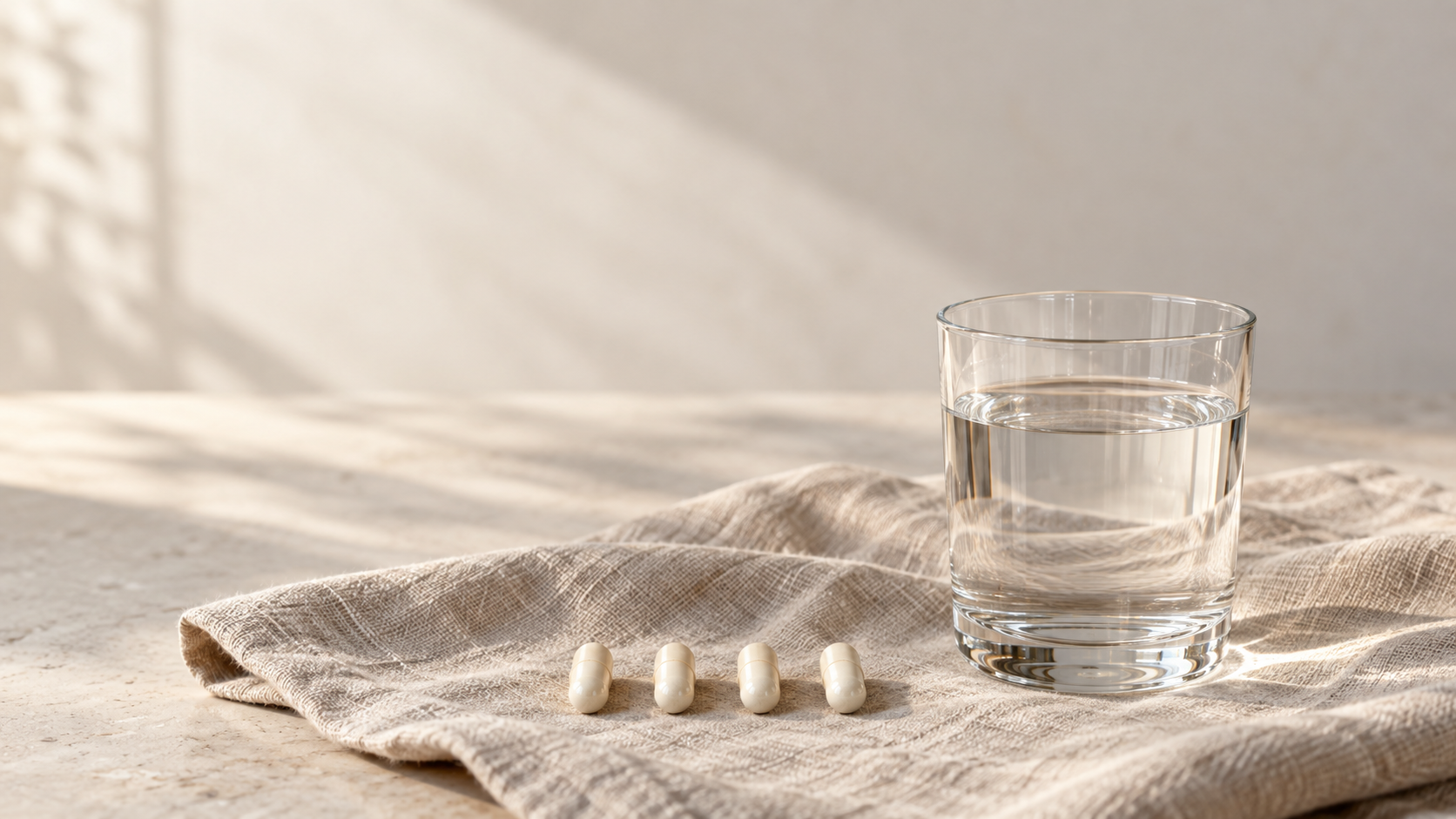
Our PeptiStrong Muscle Peptides deliver the full 2.4 g studied serving in four capsules as the only active ingredient, so it slots cleanly into whatever else you take without a proprietary blend muddying the picture. The product is here. And we will say it once more because it is true: buy creatine first.
Frequently asked questions
Is PeptiStrong better than creatine?
No, not on the evidence. Creatine has hundreds of human trials; PeptiStrong has three, all manufacturer-funded. They also do different jobs, fuel versus signaling, so the fairer framing is which one to add second, and the answer is PeptiStrong.
Can you take PeptiStrong and creatine together?
Yes. There is no known interaction, and the mechanisms are unrelated. No human trial has tested the combination, so keep expectations for a combined effect modest.
Does PeptiStrong replace creatine?
No. It does not increase phosphocreatine stores, which is creatine's entire job. It is an addition, not a substitute.
Which is better for recovery?
PeptiStrong's clearest human finding is faster strength recovery over 72 hours after a muscle-damaging session. Creatine has some recovery data too, but its strength lies in performance and lean mass. For recovery specifically, PeptiStrong has the more targeted, if much smaller, evidence.
Is one safer than the other?
Both are well tolerated in the trials that exist, with creatine's safety record far longer. PeptiStrong is fava bean derived, which matters for people with G6PD deficiency or legume allergies; that is covered in our dosage and safety guide.
PeptiStrong® is a registered trademark of Nuritas Ltd. Vita Bloom Labs uses the branded ingredient and is not otherwise affiliated with Nuritas.
These statements have not been evaluated by the Food and Drug Administration. This product is not intended to diagnose, treat, cure, or prevent any disease.

Leave a comment
This site is protected by hCaptcha and the hCaptcha Privacy Policy and Terms of Service apply.