What Is PeptiStrong? The Fava Bean Muscle Peptide, Explained
In this article
PeptiStrong is showing up on more supplement labels every month, usually with the words "AI-discovered" and "muscle" nearby and not much explanation of what it actually is. We sell it, so we owe you the explanation, including the parts the marketing tends to skip: what the human trials really tested, at what dose, and who paid for them.
Here is the whole picture.
What PeptiStrong actually is
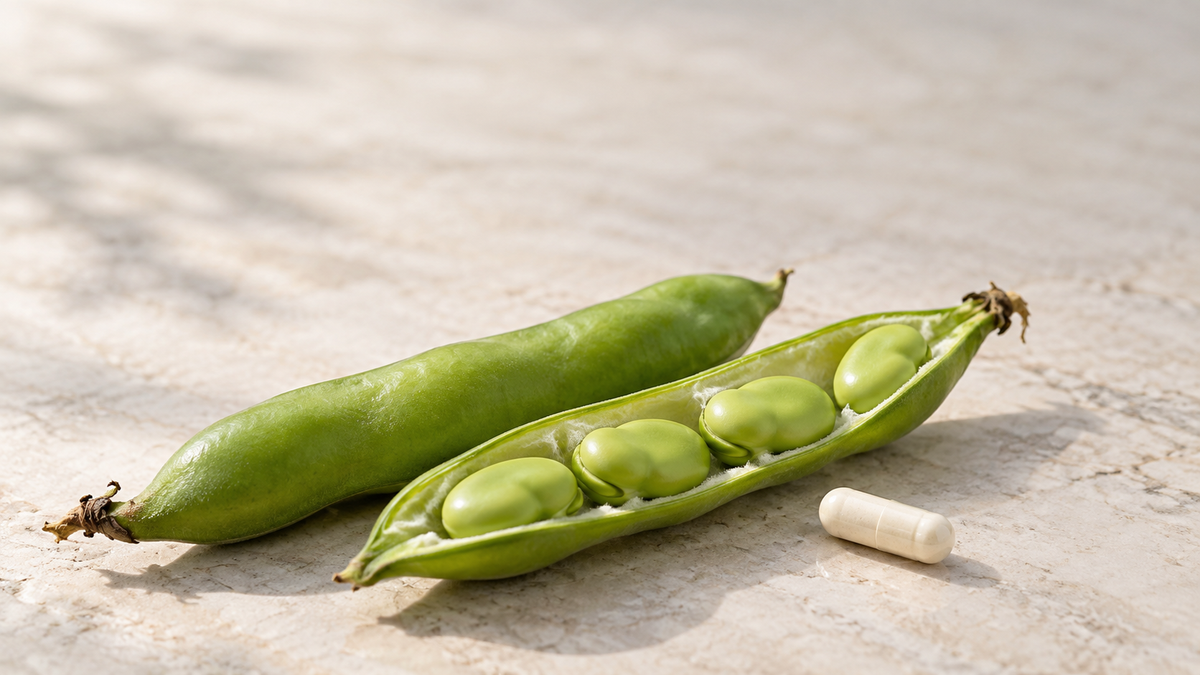
PeptiStrong is a branded ingredient made by Nuritas, a Dublin-based company. Chemically, it is a fava bean protein hydrolysate: protein from the fava bean (Vicia faba) that has been broken down into short chains of amino acids called peptides. Not a random assortment of them, though. Nuritas describes it as a peptide network, a specific set of fava-derived peptides selected because they appeared to signal muscle cells in laboratory tests.
That selection is where the "AI-discovered" label comes from. Nuritas used a computational platform to screen enormous numbers of possible peptide sequences in plant proteins for ones predicted to have biological activity, then tested candidates in cells and animals before moving to humans. The AI part is the search process. The ingredient itself is just fava bean protein, processed.
What it is not
Two clarifications save a lot of confusion.
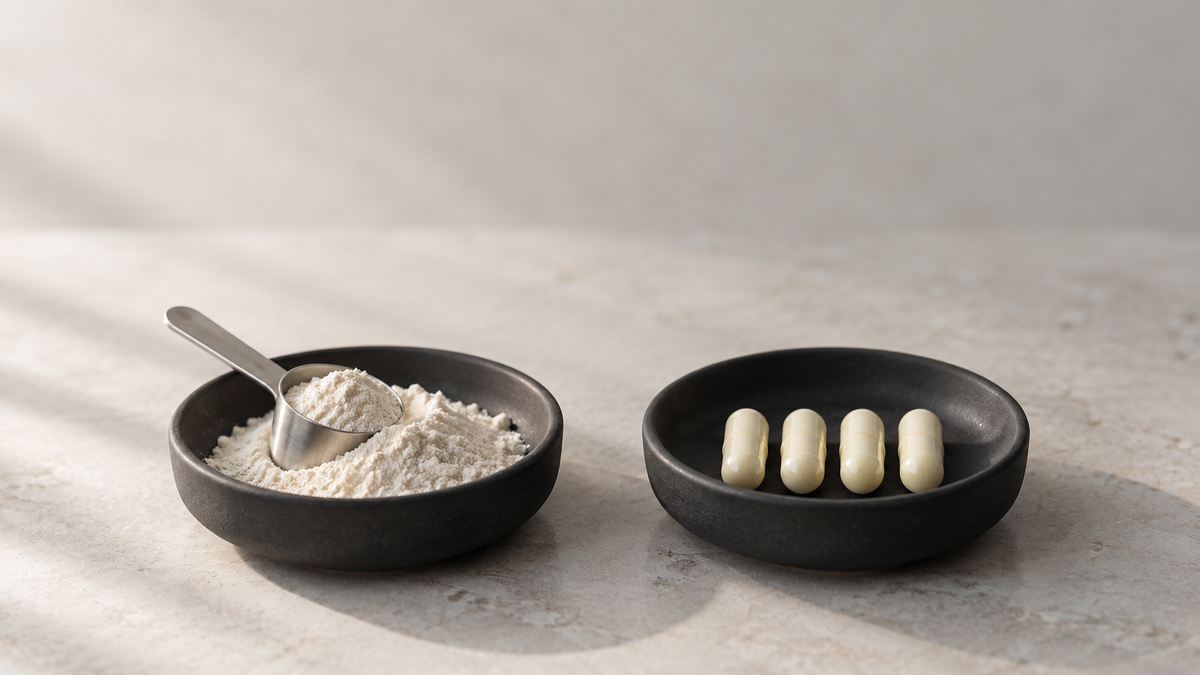
It is not a protein supplement. The studied serving is 2.4 grams a day. A scoop of protein powder is 20 to 30 grams. PeptiStrong is not there to meet your protein needs and cannot; it is a signaling ingredient taken alongside a normal protein intake, not instead of one.
It is not that kind of peptide. If "peptides" makes you think of injectable research compounds, this is a different world. PeptiStrong is food-derived, taken by mouth, and the FDA has reviewed it for use in foods at the 2.4 g serving. It is closer to a specialized fraction of a bean than to anything in a vial.
How it is proposed to work
The idea is that specific peptides survive digestion, get absorbed, and act as signals rather than building blocks. In cell studies, the peptide network increased a marker of the mTOR pathway, a central switch for muscle protein synthesis, and in human trials it reduced circulating myostatin, a protein that limits muscle growth. Those are the two mechanisms you will see cited. Note the tiering: the mTOR finding is from cells, the myostatin finding is from human blood samples, and neither is the same as a measured outcome like strength. Those come next.
What the human trials show, honestly graded
There are three published human trials. All three were funded by Nuritas and include Nuritas employees as co-authors. That is normal for a new branded ingredient and it is a reason to read the findings as promising rather than settled. Here is what each one found.
Trial one: strength recovery after hard exercise (2023). Thirty healthy men aged 30 to 45 took 2.4 g of PeptiStrong or a placebo daily for about two weeks, then did a muscle-damaging resistance session. Over the 72 hours that followed, the PeptiStrong group recovered strength better and reported less fatigue than placebo, and their myostatin levels were lower. The recovery difference was significant across the 72-hour window as a whole, not at any single time point, which is a real but modest kind of result.
Trial two: eight weeks of training (2025). Seventy-two healthy men and women aged 19 to 40, none of them regular lifters, did three resistance sessions a week for 56 days while taking 2.4 g of PeptiStrong or a placebo. The PeptiStrong group gained more leg strength at week four and week eight (the week-eight result sat right at the edge of statistical significance), gained more muscular endurance, and showed a small increase in bone mineral content that the placebo group did not. Fifty-five of the 72 completed the full protocol.
Trial three: the one with the asterisk (2023). A Maastricht University study immobilized one leg of 30 young men for a week, then tracked recovery. PeptiStrong performed the same as milk protein at limiting muscle loss and restoring muscle size, and produced higher muscle protein synthesis rates during the recovery phase. This is the study behind the "outperforms milk protein" headlines. What the headlines leave out is the dose: participants took 20 grams a day, more than eight times the 2.4 g serving in supplements. Its findings are interesting biology and they do not tell you what 2.4 g does.
The honest summary: two small, short, manufacturer-funded trials support 2.4 g of PeptiStrong for strength recovery and for strength and endurance gains alongside resistance training. There are no long-term trials, no trials in athletes or older adults published yet, and no independent replication. That is a respectable evidence base for a three-year-old ingredient, and it is a smaller one than the marketing suggests.
Safety and regulatory status
Nuritas self-affirmed GRAS status for PeptiStrong in 2022, and in late 2024 the FDA issued a letter of no objection to its GRAS notice covering food and beverage uses at 2.4 g per serving. As with every branded ingredient we sell, we describe that precisely: the review covered food uses at that serving, which is the same amount supplements use. The published trials did not report notable adverse effects. There is one fava-specific consideration, G6PD deficiency, that we cover in detail in our dosage and safety guide.
Who it is realistically for
- People who lift or train and want an addition aimed at recovery and strength. Every positive trial paired it with resistance exercise. There is no evidence it does anything for people who do not train.
- People trying to hold on to muscle during a cut or a break, with the honest note that this rationale comes from mechanism and the immobilization study, not from a trial of that exact situation at 2.4 g.
- People who already take the basics. If you are choosing between PeptiStrong and creatine or adequate protein, choose the basics first. Our PeptiStrong vs creatine comparison explains why.
How Vita Bloom fits
Our PeptiStrong Muscle Peptides deliver the full studied serving, 2.4 g of PeptiStrong® fava bean protein hydrolysate in four capsules, as the only active ingredient. No blend, no under-dosed sprinkle of the ingredient next to a proprietary label. Take it daily with water, give it the eight weeks the training trial ran, and pair it with actual training. You can see the product here, and the questions we ask before adding any ingredient to our lineup in how physicians think about supplements.
Frequently asked questions
What is PeptiStrong made from?
Fava bean (Vicia faba) protein, broken down into a specific network of peptides selected by the manufacturer, Nuritas, using a computational screening platform. It is plant-based and food-derived.
Does PeptiStrong actually work?
Two small, short, manufacturer-funded human trials at 2.4 g per day found better strength recovery after hard exercise and greater strength and endurance gains over eight weeks of resistance training. A third trial used 20 g per day, so its milk-protein comparison does not apply to supplement doses. Promising, small, and not yet independently replicated.
Is PeptiStrong a protein powder?
No. The serving is 2.4 g, roughly a tenth of a protein scoop. It is meant to be taken alongside normal protein intake as a signaling ingredient, not as a protein source.
Is PeptiStrong the same as peptide injections?
No. It is an oral, food-derived ingredient reviewed by the FDA for use in foods. It has nothing to do with injectable research peptides.
How much PeptiStrong should I take?
The studied dose is 2.4 g daily, which is four of our capsules. Full dosing, timing, and safety details are in our dosage and side effects guide.
PeptiStrong® is a registered trademark of Nuritas Ltd. Vita Bloom Labs uses the branded ingredient and is not otherwise affiliated with Nuritas.
These statements have not been evaluated by the Food and Drug Administration. This product is not intended to diagnose, treat, cure, or prevent any disease.
Educational information, not personal medical advice. Ingredient research does not establish that a finished supplement treats or prevents a disease. Follow your product label and ask your healthcare professional about personal suitability.
Questions or a suggested correction? →

Leave a comment
This site is protected by hCaptcha and the hCaptcha Privacy Policy and Terms of Service apply.