
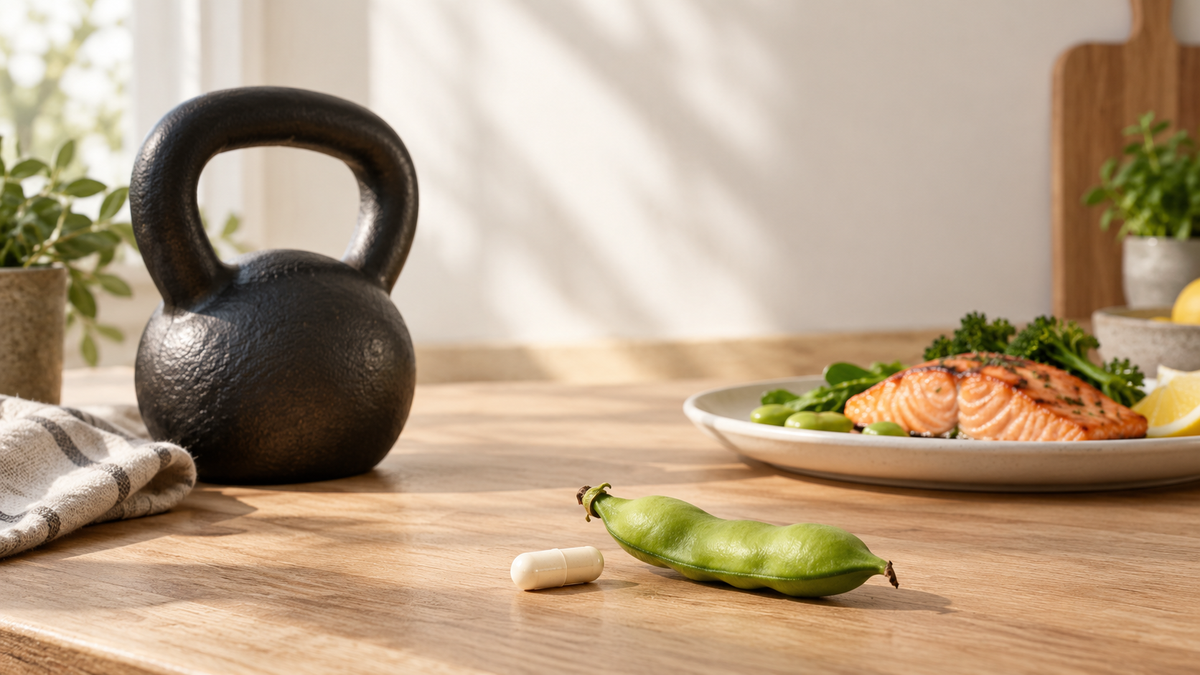
Muscle Loss During Weight Loss and GLP-1s: How to Keep Your Muscle
In this article
When you lose weight, the goal is to lose fat. In practice, some of what comes off is lean tissue, including muscle. That matters, because muscle drives strength, supports how your body handles blood sugar and keeps you capable as you age. With GLP-1 medications producing larger and faster weight loss than ever, protecting muscle has become one of the most common questions I hear. Here is what the research says and what actually helps.
Why weight loss costs muscle
A calorie deficit means your body is short on energy, and it draws on its own tissues to make up the difference. Most of that comes from fat, but some comes from lean tissue. The share that comes from muscle tends to be larger when protein intake is low, when you are not strength training and when weight comes off quickly.
What about GLP-1 medications?
GLP-1 medications such as semaglutide reduce appetite and can produce substantial weight loss. In the STEP 1 trial, adults taking semaglutide 2.4 mg lost an average of 14.9 percent of their body weight over 68 weeks, compared with 2.4 percent on placebo.
How much of that loss is muscle is still debated. A 2024 review found wide variation across trials: in some studies, lean mass made up 40 to 60 percent of the weight lost, while in others it was about 15 percent or less. The review also made an important point: "lean mass" includes organs, bone and water, not just muscle, and imaging studies suggest the muscle changes may be roughly what you would expect for the amount of weight lost. Either way, the practical advice is the same. Anyone losing a meaningful amount of weight, with or without medication, should take active steps to protect muscle.
What actually protects muscle
| Lever | What the evidence supports |
|---|---|
| Resistance training | The strongest signal to keep muscle. The American College of Sports Medicine suggests two to three sessions a week for beginners. |
| Protein | The International Society of Sports Nutrition suggests 1.4 to 2.0 g per kilogram of body weight a day for active people, and notes that higher intakes may help resistance-trained people hold lean mass during a calorie deficit. |
| Protein spread across meals | About 20 to 40 g per meal, every three to four hours, rather than one large serving. |
| Sleep | In a 2021 study, one night without sleep cut muscle protein synthesis by 18 percent. |
Practical tips if you are on a GLP-1
- Eat protein first. When your appetite is small, start each meal with the protein so it does not get crowded out.
- Lift, even a little. Two or three full-body sessions a week is a meaningful start.
- Track strength, not just the scale. If your lifts are holding steady or climbing while weight drops, you are protecting muscle.
- Talk to your prescriber about protein targets that fit your kidneys, your medical history and your goals.
Where PeptiStrong fits
PeptiStrong is a network of peptides made by breaking down fava bean protein. At 2.4 g a day it is not a meaningful source of protein, and it does not replace the levers above. It is designed to work alongside resistance training. Our explainer, what is PeptiStrong, covers the ingredient.
In a 2025 double-blind trial in 72 men and women aged 19 to 40 who were new to regular lifting, 2.4 g a day for 56 days alongside resistance training produced greater gains in leg strength than training with a placebo, at both 28 and 56 days, along with about 21.6 percent more improvement in muscular endurance. These were healthy adults on a training program, not people in a weight-loss program, so think of PeptiStrong as a complement to a muscle-protecting plan rather than the plan itself.
Who should check with a physician first
If you take a GLP-1 medication, or you are losing weight quickly for any reason, check in with your physician about protein and exercise. Talk to your physician before using PeptiStrong if you have G6PD deficiency or a history of favism, a legume allergy, kidney disease, or if you are pregnant, breastfeeding, under 18 or take prescription medication.
How Vita Bloom fits
Our PeptiStrong Muscle Peptides deliver 2.4 g of PeptiStrong® in four capsules a day, as the only active ingredient. Take them daily with water at any time, alongside resistance training, and give it at least eight weeks. Weighing your options? Read PeptiStrong vs creatine.
Frequently asked questions
Do GLP-1 medications cause muscle loss?
Some of the weight lost on GLP-1 medications is lean tissue, as with any weight loss. How much is muscle varies widely between studies. Resistance training and adequate protein are the best-supported ways to protect it.
How much protein should I eat while losing weight?
Many active adults aim for 1.4 to 2.0 g per kilogram of body weight a day, spread across meals. Your physician can tailor that to your health.
Can you lose fat without losing muscle?
Often, yes, especially if you lift regularly, eat enough protein and lose weight at a steady pace. Beginners can sometimes gain muscle while losing fat.
Does PeptiStrong prevent muscle loss?
No supplement can promise that. PeptiStrong is designed to support strength and endurance alongside resistance training, as part of a plan that includes protein and sleep.
PeptiStrong® is a registered trademark of Nuritas Ltd. Vita Bloom Labs uses the branded ingredient and is not otherwise affiliated with Nuritas.
These statements have not been evaluated by the Food and Drug Administration. This product is not intended to diagnose, treat, cure, or prevent any disease.
Educational information, not personal medical advice. Ingredient research does not establish that a finished supplement treats or prevents a disease. Follow your product label and ask your healthcare professional about personal suitability.
Questions or a suggested correction? →


Leave a comment
This site is protected by hCaptcha and the hCaptcha Privacy Policy and Terms of Service apply.