

Muscular Endurance: What It Is and How to Build It
In this article
Strength gets most of the attention in the gym, but much of daily life runs on a different quality: muscular endurance. It is what lets you carry groceries up three flights of stairs, hold a plank, finish the last set with good form or play a full game without your legs giving out. Here is what muscular endurance is, how to train it and where PeptiStrong fits.
What muscular endurance is
Muscular endurance is a muscle's ability to keep working: to repeat a movement many times, or to hold a position, before it fatigues. It is related to, but different from, two other qualities:
- Muscular strength is the most force a muscle can produce once, like a one-repetition maximum.
- Cardiorespiratory endurance is your heart and lungs' ability to keep you moving, like running or cycling for 30 minutes.
The three overlap, and training one tends to help the others, but each responds best to its own kind of training.
How to train it
The American College of Sports Medicine's guidance on resistance training gives a clear starting point. For muscular endurance, it recommends light to moderate loads, around 40 to 60 percent of your one-repetition maximum, for high repetitions (more than 15) with short rest periods of under 90 seconds.
| Goal | Load | Reps | Rest |
|---|---|---|---|
| Muscular endurance | 40 to 60 percent of max | More than 15 | Under 90 seconds |
| Muscle size | Moderate | Mostly 6 to 12 | 1 to 2 minutes |
| Maximal strength | Heavy | Mostly 1 to 6, for experienced lifters | 3 to 5 minutes |
Good endurance tools include bodyweight circuits (push-ups, squats, lunges, planks), lighter dumbbell or kettlebell work, rowing and carries. Beginners can train two to three days a week and add repetitions or rounds before adding load.
How to measure your progress
The simplest test is repetitions to fatigue: how many good-form push-ups, bodyweight squats or reps at a fixed weight you can do before you have to stop. Retest every four weeks using the same exercise, load and rest. That is essentially how researchers measured endurance in the PeptiStrong trial below.
Where PeptiStrong fits
PeptiStrong is a network of peptides made from fava bean protein, designed to support strength and endurance alongside training. In a 2025 double-blind trial, 72 men and women aged 19 to 40 who were new to regular lifting did 56 days of resistance training while taking either 2.4 g of PeptiStrong or a placebo daily.
- Endurance: the improvement in repetitions to exhaustion was 2.2 times larger in the PeptiStrong group, about 21.6 percent more than placebo.
- Strength: leg strength also increased more than with placebo, at both 28 and 56 days.
Our explainer, what is PeptiStrong, covers the research, and how to speed up muscle recovery covers the other half of the equation.
Who should check with a physician first
If you are new to exercise and have heart disease, high blood pressure, diabetes or joint problems, check with your physician before starting a new program. Talk to your physician before using PeptiStrong if you have G6PD deficiency or a history of favism, a legume allergy, or if you are pregnant, breastfeeding, under 18 or take prescription medication.
How Vita Bloom fits
Our PeptiStrong Muscle Peptides deliver 2.4 g of PeptiStrong® in four capsules a day, the amount used in the 2025 trial, as the only active ingredient. Take them daily with water at any time, alongside resistance training, and give it at least eight weeks.
Frequently asked questions
What is the difference between muscular strength and muscular endurance?
Strength is the most force you can produce once. Endurance is how long, or how many times, a muscle can keep working before it tires.
What are the best exercises for muscular endurance?
Higher-repetition sets of squats, lunges, push-ups, rows and planks, plus circuits with short rest. Pick movements you can do with good form for 15 or more reps.
How long does it take to improve muscular endurance?
Beginners often notice progress within a few weeks of consistent training. The PeptiStrong trial measured changes over eight weeks.
Does PeptiStrong improve muscular endurance?
In a 2025 trial, 2.4 g a day alongside resistance training supported about 21.6 percent more improvement in muscular endurance than training with a placebo.
PeptiStrong® is a registered trademark of Nuritas Ltd. Vita Bloom Labs uses the branded ingredient and is not otherwise affiliated with Nuritas.
These statements have not been evaluated by the Food and Drug Administration. This product is not intended to diagnose, treat, cure, or prevent any disease.
Educational information, not personal medical advice. Ingredient research does not establish that a finished supplement treats or prevents a disease. Follow your product label and ask your healthcare professional about personal suitability.
Questions or a suggested correction? →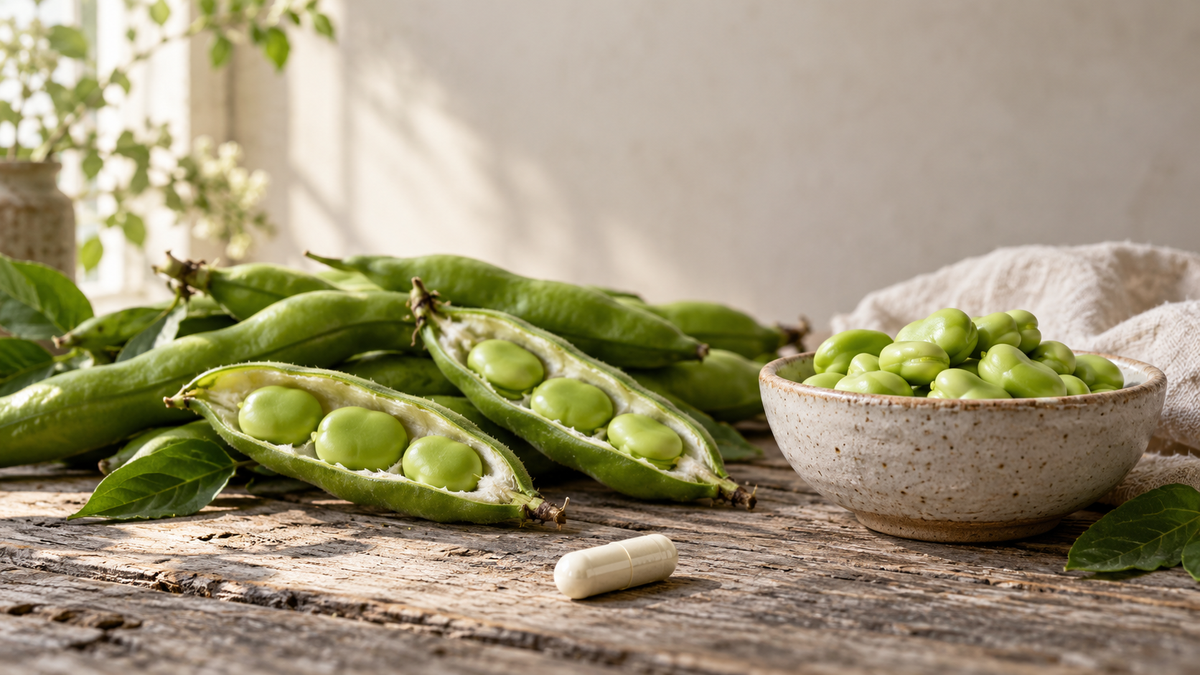


Leave a comment
This site is protected by hCaptcha and the hCaptcha Privacy Policy and Terms of Service apply.