
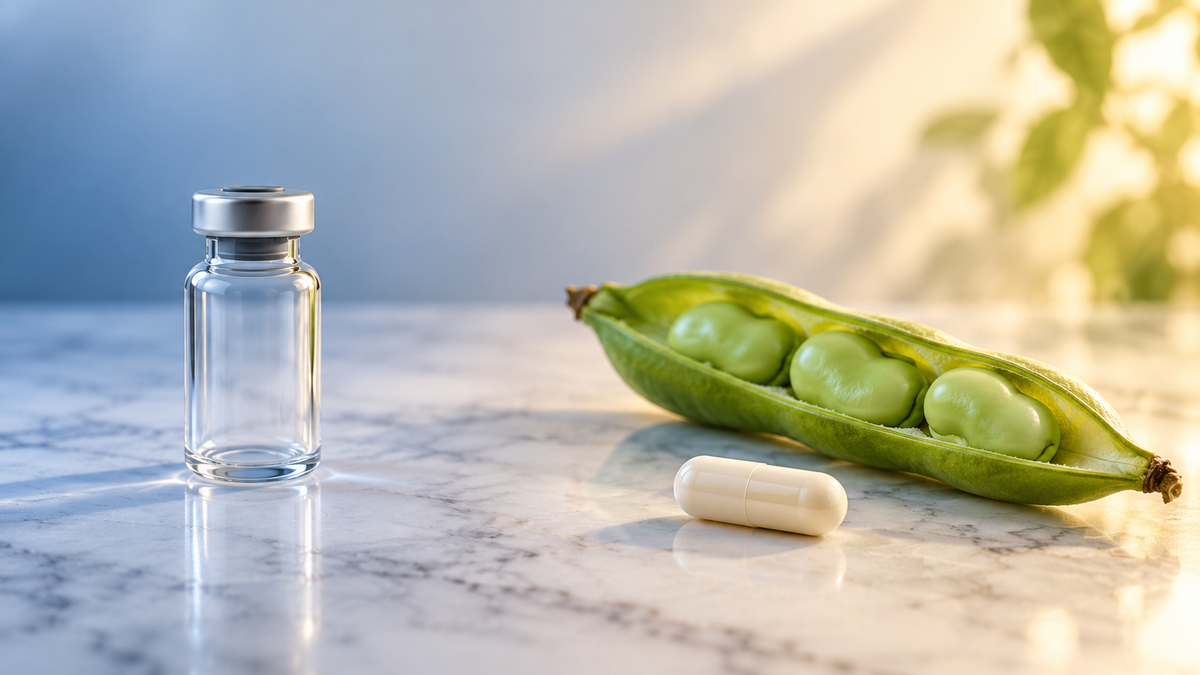
Peptides for Muscle Growth: Food Peptides vs Injectables Like BPC-157
In this article
"Peptides" have become one of the most searched words in fitness. The trouble is that the word covers very different things, from the collagen in your coffee to prescription drugs to vials sold online "for research use only." If you are trying to build or protect muscle, knowing which kind of peptide you are looking at matters for evidence, safety and the law.
What a peptide is
A peptide is a short chain of amino acids, the building blocks of protein. Your body makes thousands of them, and many foods contain them. Some of the best-known medicines are peptides too, including insulin and GLP-1 medications. So "peptide" describes a structure, not a category of product. What matters is where it comes from, how it is taken and what evidence and approvals stand behind it.
Three very different kinds of peptides
| Type | Examples | How they are regulated |
|---|---|---|
| Food-derived peptides | Collagen peptides, PeptiStrong | Sold as foods or dietary supplement ingredients, taken by mouth |
| Prescription peptide drugs | Insulin, semaglutide | FDA-approved medicines, prescribed by a clinician |
| Investigational peptides | BPC-157 | Not FDA-approved; often sold online as research chemicals |
What BPC-157 is, and what we know
BPC-157 is a synthetic peptide of 15 amino acids, based on a sequence originally isolated from gastric juice. It has been studied extensively in animals, where it has shown effects on tissue repair, and it has become popular in some fitness circles for muscle and tendon recovery, usually by injection.
The human evidence is very thin. A 2025 review found only three small pilot studies in people, and concluded that BPC-157 should be considered investigational until well-designed trials are done. One of those pilots, a 2025 intravenous safety study, included just two participants. The regulatory picture is also unsettled. In July 2026, an FDA advisory committee voted to recommend allowing BPC-157 to be used in pharmacy compounding with a prescription, but that recommendation is not final, and it would not make BPC-157 a dietary supplement. The World Anti-Doping Agency has listed it as a prohibited substance since 2022. Products sold online as research chemicals also carry no guarantee of purity or dose.
What PeptiStrong is
PeptiStrong takes a different route. It is a network of peptides produced by breaking down fava bean protein, taken by mouth as a food ingredient. In December 2024, the FDA responded with no questions to a GRAS (generally recognized as safe) notice for PeptiStrong in foods at 2.4 g per serving. It has also been tested in published human trials:
- Recovery: in a 2023 double-blind trial in 30 healthy men aged 30 to 45, 2.4 g a day supported better strength recovery over 72 hours after a hard workout, with less fatigue, compared with placebo.
- Strength and endurance: in a 2025 double-blind trial in 72 men and women aged 19 to 40, 2.4 g a day for 56 days alongside resistance training produced greater gains in leg strength than placebo, plus about 21.6 percent more improvement in muscular endurance.
Our explainer, what is PeptiStrong, covers the research in detail.
PeptiStrong vs BPC-157 at a glance
| PeptiStrong | BPC-157 | |
|---|---|---|
| Origin | Peptides from fava bean protein | Single synthetic peptide |
| How it is taken | By mouth, as capsules | Usually injected |
| Human trials | Published randomized, placebo-controlled trials | A few small pilot studies |
| Regulatory status | FDA had no questions on its GRAS notice for food use | Not FDA-approved; compounding status under review |
Who should check with a physician first
Please do not inject products sold for research use. If you are considering any injectable peptide, talk to your physician first. Talk to your physician before using PeptiStrong if you have G6PD deficiency or a history of favism, a legume allergy, or if you are pregnant, breastfeeding, under 18 or take prescription medication. Competitive athletes should check every product with their sport's anti-doping rules.
How Vita Bloom fits
Our PeptiStrong Muscle Peptides deliver 2.4 g of PeptiStrong® in four capsules a day, as the only active ingredient, made in an NSF-certified, GMP-compliant facility and third-party tested. Take them daily with water, alongside resistance training, and give it at least eight weeks. Comparing options? Read PeptiStrong vs creatine.
Frequently asked questions
What peptides help build muscle?
The best-supported option is plain dietary protein, which your body breaks into amino acids and peptides. Among supplement ingredients, PeptiStrong has published human trials alongside resistance training. Most injectable "muscle" peptides lack solid human evidence.
Is BPC-157 legal?
It is not FDA-approved. In July 2026 an FDA advisory committee recommended allowing it in prescription pharmacy compounding, but that is not yet final. It is prohibited in sport.
Is PeptiStrong like BPC-157?
No. PeptiStrong is a food-derived peptide network taken by mouth, with a GRAS notice the FDA had no questions about and published human trials. BPC-157 is a single synthetic peptide, usually injected, with very limited human data.
Are oral peptides destroyed by digestion?
Digestion breaks down many peptides, which is one reason human trials matter more than theory. PeptiStrong's effects were measured in people who took it by mouth.
PeptiStrong® is a registered trademark of Nuritas Ltd. Vita Bloom Labs uses the branded ingredient and is not otherwise affiliated with Nuritas.
These statements have not been evaluated by the Food and Drug Administration. This product is not intended to diagnose, treat, cure, or prevent any disease.
Educational information, not personal medical advice. Ingredient research does not establish that a finished supplement treats or prevents a disease. Follow your product label and ask your healthcare professional about personal suitability.
Questions or a suggested correction? →

Leave a comment
This site is protected by hCaptcha and the hCaptcha Privacy Policy and Terms of Service apply.