
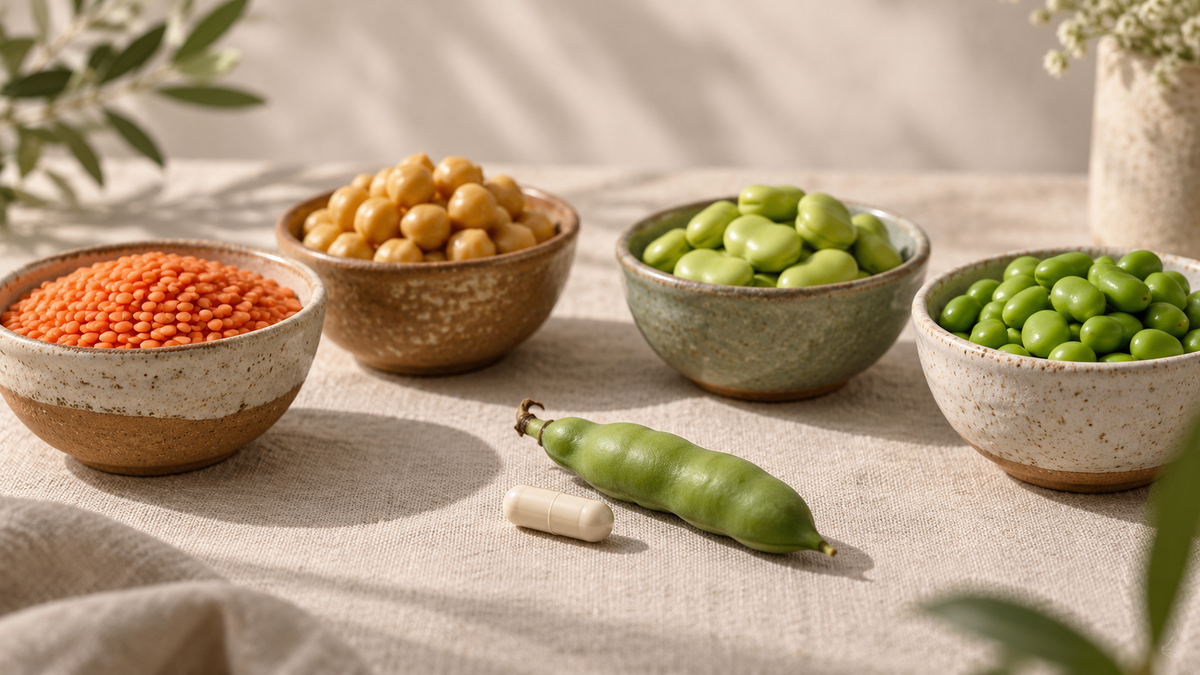
Plant-Based Protein for Building Muscle: Where Fava Bean Peptides Fit
In this article
More people are building muscle on plants, and the most common question I hear is whether it works as well as whey, eggs or meat. The short answer is yes, as long as you get enough and pay attention to a few details. Here is what the research shows, how to make plant protein work for you, and where fava bean peptides fit in.
Can plant protein build muscle?
Yes. A 2018 meta-analysis pooled nine studies with 266 participants who did resistance training while supplementing with either soy protein or animal protein such as whey, beef or dairy. Strength and lean mass increased in both groups, and there was no meaningful difference between them.
The nuance comes from short-term lab studies. Whey tends to stimulate muscle protein synthesis more strongly after a single serving, most likely because it contains more leucine, the amino acid that acts as a key "on switch" for muscle building. Over weeks and months of training, though, total protein and consistent training matter far more than the source.
How to make plant protein work
- Get enough in total. The International Society of Sports Nutrition suggests 1.4 to 2.0 g of protein per kilogram of body weight a day for active people. A 2018 meta-analysis found that extra protein stopped adding muscle beyond about 1.6 g per kilogram a day.
- Aim for leucine at each meal. The same society suggests 700 to 3,000 mg of leucine per serving. Plant proteins tend to carry less leucine, so slightly larger servings help.
- Mix your sources. Combining legumes, soy, grains, nuts and seeds through the day covers the full range of essential amino acids.
- Spread it out. About 20 to 40 g of protein per meal, every three to four hours, beats one large serving.
Plant protein sources at a glance
| Source | Strengths | Keep in mind |
|---|---|---|
| Soy (tofu, tempeh, edamame, soy protein) | Contains all essential amino acids; the best-studied plant protein for muscle | Avoid if you have a soy allergy |
| Pea protein | Common, easy-to-digest protein powder base | Often blended with rice protein to round out amino acids |
| Lentils, chickpeas and beans | Protein plus fiber and minerals | Bulky; hard to reach high protein targets from these alone |
| Fava beans | About 13 g of protein and 9 g of fiber per cooked cup | Not suitable for people with G6PD deficiency |
| Grains, nuts and seeds | Complement legumes across the day | Calorie-dense; lower in protein per serving |
Where fava bean peptides fit
PeptiStrong is made by breaking fava bean protein into a network of short peptides. At 2.4 g a day it is not a protein source in any meaningful sense, so it does not replace your protein intake. It was developed to work alongside training as a plant-derived ingredient. Our explainer, what is PeptiStrong, covers how it was made.
In a 2025 double-blind trial in 72 men and women aged 19 to 40 who were new to regular lifting, 2.4 g a day for 56 days alongside resistance training produced greater gains in leg strength than training with a placebo, plus about 21.6 percent more improvement in muscular endurance. For people building muscle on plants, it is a plant-derived option that stacks easily with the protein you already eat. For more on the bean itself, read fava beans: nutrition and benefits.
Who should check with a physician first
If you have kidney disease, ask your physician before raising your protein intake. Talk to your physician before using PeptiStrong if you have G6PD deficiency or a history of favism, a legume allergy, or if you are pregnant, breastfeeding, under 18 or take prescription medication.
How Vita Bloom fits
Our PeptiStrong Muscle Peptides deliver 2.4 g of PeptiStrong® in four vegetarian capsules a day, as the only active ingredient. Take them daily with water at any time, alongside resistance training and a protein-rich diet, and give it at least eight weeks.
Frequently asked questions
Is plant protein as good as whey for building muscle?
Over a training program, studies comparing soy with whey and other animal proteins found similar gains in strength and lean mass. Getting enough total protein matters most.
Do I need to combine plant proteins at every meal?
No. Eating a variety of plant proteins across the day is enough to cover your essential amino acids.
How much protein do I need to build muscle?
Many active adults aim for 1.4 to 2.0 g per kilogram of body weight a day, spread across meals.
Is PeptiStrong a protein supplement?
No. It is a fava bean peptide ingredient taken at 2.4 g a day to support strength and recovery alongside training. It complements your protein; it does not replace it.
PeptiStrong® is a registered trademark of Nuritas Ltd. Vita Bloom Labs uses the branded ingredient and is not otherwise affiliated with Nuritas.
These statements have not been evaluated by the Food and Drug Administration. This product is not intended to diagnose, treat, cure, or prevent any disease.
Educational information, not personal medical advice. Ingredient research does not establish that a finished supplement treats or prevents a disease. Follow your product label and ask your healthcare professional about personal suitability.
Questions or a suggested correction? →

Leave a comment
This site is protected by hCaptcha and the hCaptcha Privacy Policy and Terms of Service apply.