
What Is Butyrate? Benefits, Foods, and Supplements
In this article
Butyrate is having a moment in gut health, and for once the attention is landing on something with real substance behind it. But most of what gets said about it skips the basics. What is butyrate, why does your gut care about it, and what is the best way to get more of it? Here is a clear, science-first guide.
What is butyrate?
Butyrate is a short-chain fatty acid, which is a small molecule your gut bacteria produce when they ferment dietary fiber. It is not something you have to seek out from an exotic source. Your own microbiome makes it every day, provided you feed it the right things.
What makes butyrate special is its job. It is the preferred fuel source for colonocytes, the cells that line your colon. Those cells run largely on butyrate, which is a big part of why this particular fatty acid gets so much research attention.
Why butyrate matters for gut health
Because it fuels the cells lining the colon, butyrate is closely tied to the health of the gut barrier, the single-cell-thick lining that separates what is inside your gut from the rest of your body. Butyrate supports the integrity of that barrier and is one of the main ways your microbiome communicates with the rest of you.
The honest framing, and the one we use, is this: butyrate helps fuel the colon lining and supports gut barrier integrity as part of a healthy gut. That is a structure-and-function statement, not a claim that butyrate treats any condition.
How your body makes butyrate
Here is the part most articles skip. You do not usually eat much butyrate directly. Instead, specific gut bacteria produce it by fermenting the fiber and resistant starch you eat. Feed those bacteria well, and they make more butyrate. Feed them poorly, and they make less.
That means the most powerful lever for butyrate is not a single food, it is the overall diversity and fiber content of your diet.
Foods that support butyrate
The best way to raise butyrate through food is to eat the things your butyrate-producing bacteria thrive on:
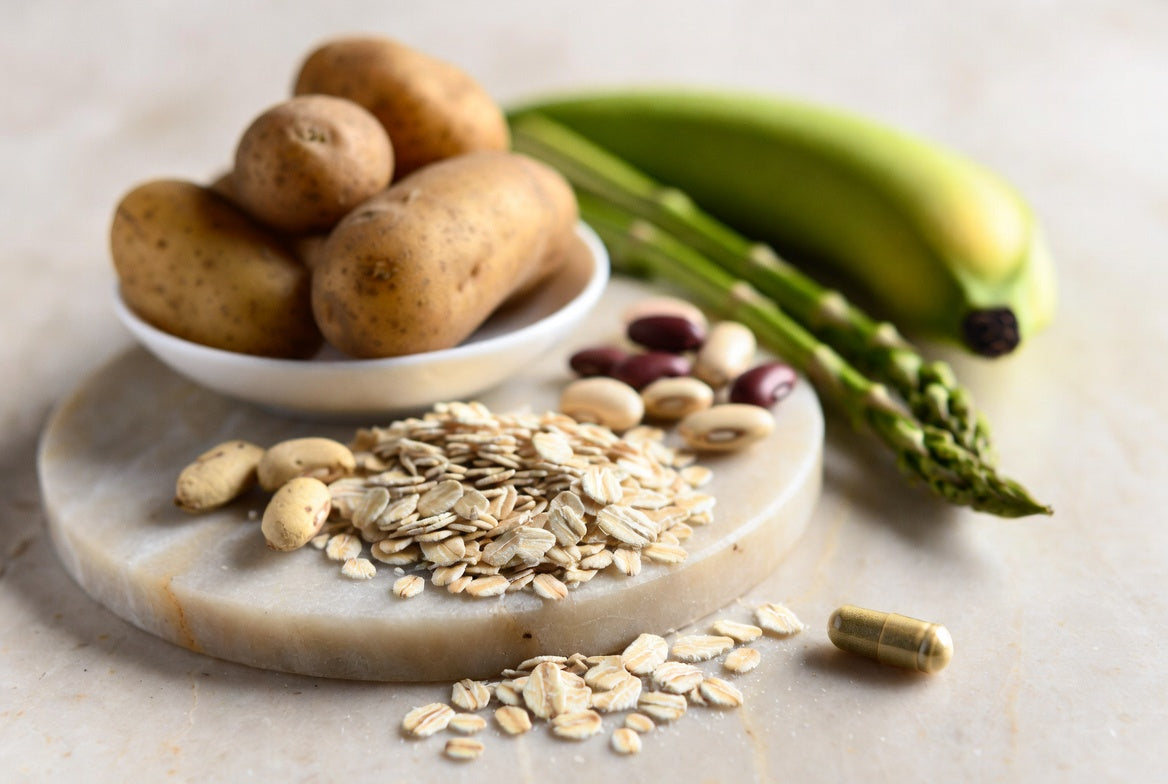
- Resistant starch. Found in cooked and cooled potatoes, rice, and pasta, green bananas, and legumes. Cooking then cooling starchy foods actually increases their resistant starch.
- Whole grains and oats. Oats, barley, and other whole grains are classic fuel for a fiber-fermenting microbiome.
- Legumes. Beans, lentils, and chickpeas are among the most fiber-dense foods available.
- A wide range of vegetables. Onions, garlic, leeks, asparagus, and many others feed beneficial bacteria.
You may also read that butter and ghee contain butyrate, which is true, but the amounts are small compared with what your gut can produce from a fiber-rich diet. Think of butter as a minor bonus, not a strategy.
Butyrate supplements: when diet is not enough
Diet is the foundation, but some people want a more direct and consistent source, whether because their diet is hard to change, their fiber intake is low, or they simply want to add butyrate on top of good habits. That is where butyrate supplements come in.
There are two main forms, and they are not equivalent. Sodium butyrate is the traditional salt form, and tributyrin is a more stable, largely odor-free form designed to carry more butyrate further down the digestive tract. We break the two down in detail in our guide to tributyrin vs sodium butyrate. If you are new to the whole category, our explainer on prebiotics, probiotics, and postbiotics puts butyrate in context.
How Vita Bloom fits
Our Tributyrin is a single-ingredient butyrate postbiotic in a once-daily vegetarian capsule, with no blend and none of the classic butyrate odor to work around. It is a clean way to add butyrate directly, alongside the fiber-forward diet that does the foundational work.
See our Tributyrin postbiotic, or explore the full gut health collection.
Safety
Butyrate supplements are generally well tolerated by healthy adults when used as directed, with digestive changes being the most common thing to notice when starting. Talk to your physician before starting any butyrate supplement if you are pregnant, nursing, take medication, or have a digestive or other health condition.
Frequently asked questions
What is butyrate?
Butyrate is a short-chain fatty acid your gut bacteria produce by fermenting dietary fiber. It is the main fuel for the cells lining your colon and supports the integrity of the gut barrier.
How can I increase butyrate naturally?
Feed the bacteria that make it. Eat more fiber and resistant starch from foods like legumes, oats and whole grains, and cooked-and-cooled potatoes or rice, along with a wide variety of vegetables. Diet diversity matters more than any single food.
What foods contain butyrate?
Butter and ghee contain small amounts of butyrate directly, but the far larger source is what your own gut produces from fiber. Focus on fiber-rich, resistant-starch foods rather than trying to eat butyrate itself.
Are butyrate supplements worth it?
Diet is the foundation. A supplement can be a convenient, consistent way to add butyrate directly, especially if your fiber intake is low or hard to change. Tributyrin and sodium butyrate are the two main forms, and they differ in stability, odor, and delivery.
Is butyrate the same as fiber?
No. Fiber is what you eat; butyrate is one of the beneficial compounds your bacteria make from that fiber. Fiber is the input, butyrate is a valuable output.
These statements have not been evaluated by the Food and Drug Administration. This product is not intended to diagnose, treat, cure, or prevent any disease.
Educational information, not personal medical advice. Ingredient research does not establish that a finished supplement treats or prevents a disease. Follow your product label and ask your healthcare professional about personal suitability.
Questions or a suggested correction? →

Leave a comment
This site is protected by hCaptcha and the hCaptcha Privacy Policy and Terms of Service apply.